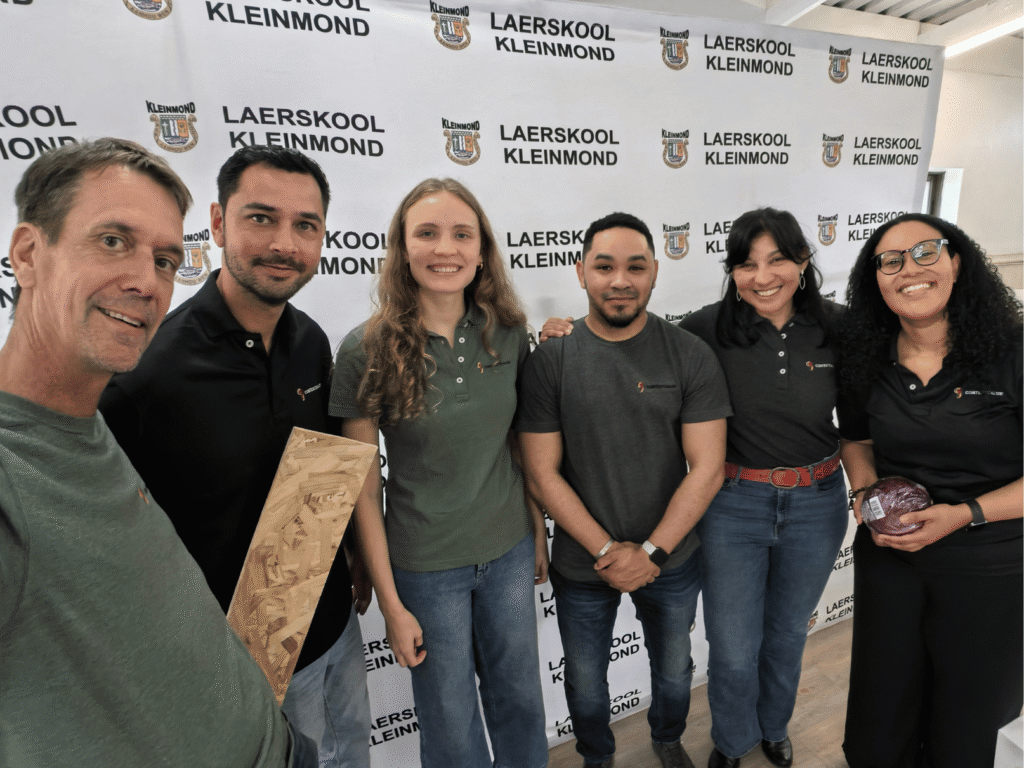
On 26 August 2026, the CLS team of scientists ventured out to Kleinmond Laerskool for an afternoon filled with chemistry, coding and robotics. We had the privilege of working with Grade 5 and 6 learners, introducing them to some of the activities and projects that form part of our programmes.
Chemistry Workshop
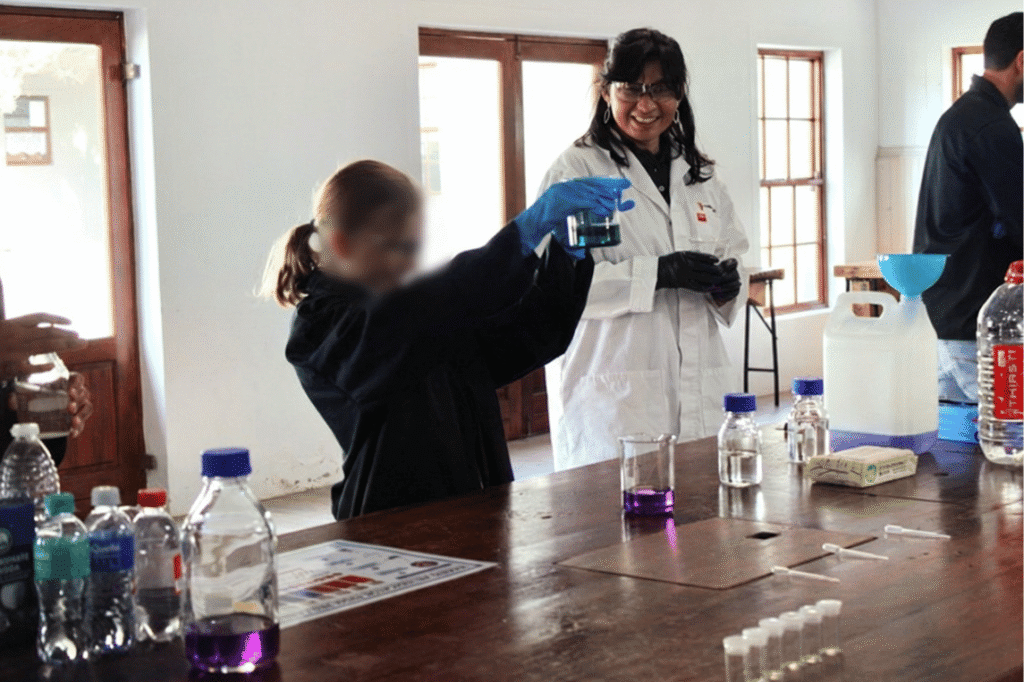
Our team of scientists began their time with a series of fun and attention-grabbing chemistry demonstrations. Our aim was not only to entertain, but to give learners the opportunity to experience some of the science they may encounter in the classroom in a more hands-on way.
A few lucky learners had the opportunity to gear up in protective equipment and get hands-on with some of the experiments themselves. These included an elephant toothpaste demonstration and using red cabbage as a natural pH indicator to investigate how different substances can change colour depending on their acidity or alkalinity. We also brought along some of our own products and research projects for a “show and tell”, giving the learners an opportunity to see examples of the type of work that scientists carry out beyond the classroom.
There were plenty of questions throughout the session, with learners curious about both the experiments and the work behind them. It was great to see them getting involved and engaging with the science in front of them.
Coding & Robotics Workshop
During our coding and robotics workshop, we introduced the learners to a combination of unplugged and technology-based activities. One of the key messages we wanted to reinforce was that developing skills in computer science, coding and robotics does not have to be limited by the resources available.
This is an important part of the philosophy behind the CLS programme. While access to computers, Wi-Fi and robotics equipment can provide valuable opportunities, a lack of these resources should not prevent learners from developing computational thinking and problem-solving skills. Our programme therefore incorporates unplugged activities that allow learners to engage with coding concepts even when technology is not readily available.
Our unplugged activity was a great way to start the coding session. Working together in teams, the learners were challenged to navigate a problem using block-based coding. The activity encouraged communication and teamwork, while also introducing important concepts in coding, computational thinking, and problem-solving.
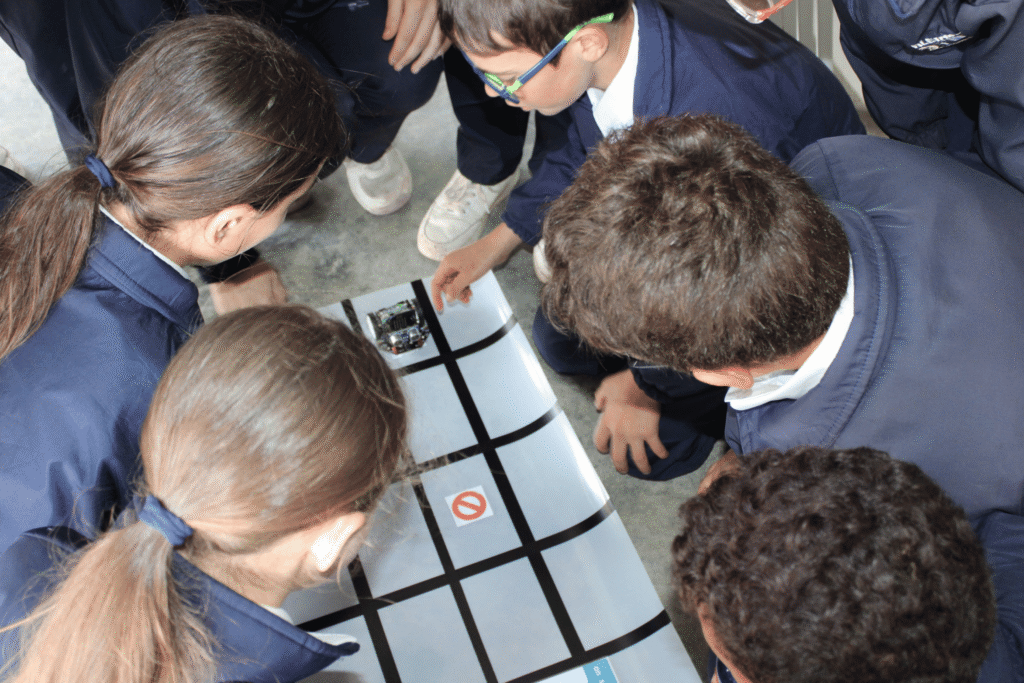
From there, the learners moved on to working directly with robots. They learned how to download code onto a Micro:Bit and use block-based coding to instruct their robots to navigate our activity mats, putting their coding and robotics skills into practice. They also learned the importance of debugging their programs when things didn’t go according to plan. The mats were designed to support interdisciplinary learning. As the learners guided their robots across provinces, countries, and continents, they were also introduced to elements of geography and tourism. Through this hands-on process of trial and error, learners experienced the full coding cycle: writing code, testing it, identifying mistakes, debugging, and trying again. More importantly, they experienced that mistakes are a natural and valuable part of the learning process.
A Great Afternoon at Kleinmond Laerskool
All in all, it was a successful and rewarding afternoon. We thoroughly enjoyed our time at Kleinmond Laerskool and were encouraged by the learners’ enthusiasm and willingness to get involved.
At CLS, we believe that giving learners the opportunity to experiment, ask questions and work through problems is an important part of learning. Whether they are watching a chemical reaction, programming a robot or working through an unplugged coding challenge, these activities give learners a chance to explore STEM in a practical way.
We hope that our visit gave both the learners and teachers some new ideas to take forward, and that it provided a glimpse into the types of activities that can be used to bring science, coding and robotics into the classroom.